

Why Dental X-rays Are Needed?
There’s a lot going on in your mouth that is not visible to the naked eye, and dental X-rays allow your dentist to see what’s happening below the surface. During general dental examination, taking of X-rays will provide a comprehensive assessment of the health of your mouth.
No visible signs of trouble
Tooth decay can be sneaky – it doesn’t tend to show physical signs of its presence early on. X-rays are an important diagnostic tool that allows your dentist to confirm if you have tooth decay, or if you have any problems such as infection around the roots of the tooth, or bone loss. Spotting it early means your dentist can deal with the problem before it becomes significant.
Safe for everyone
Regardless of whether you’re a child or an adult, you can have X-rays safely taken of the inside and outside of your mouth. The amount of radiation involved is extremely low, and is equivalent to the sort of exposure you’d receive on a 1-2 hour flight. This means that even if you’re pregnant you can have X-rays taken, although they are generally kept to a minimum during this period.
Oh, and that thing about your dentist leaving the room while the X-rays are taken? Nothing to worry about there – they’re taking lots of X-rays all day long and stepping out of the room limits their ongoing exposure to radiation.
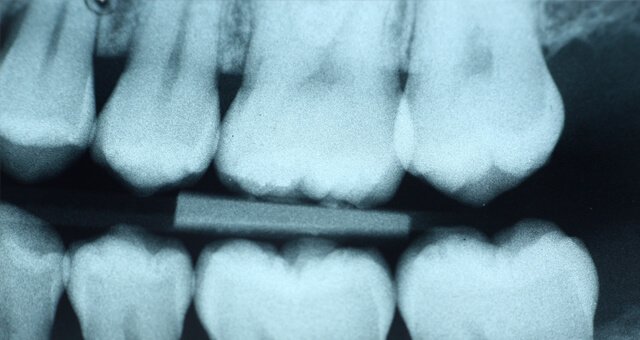
Why X-rays are needed
The types of X-rays your dentist will take will depend on the conditions for which you are being assessed. The decision to take an X-ray, and the type of X-ray taken, will be influenced by such things as your past and present oral health, an examination of your mouth, your age, risk of disease and any early symptoms of oral disease.
What can dental X-rays detect?
• Small areas of decay between teeth not visible in the mouth
• Problems with existing fillings, root canals, crowns or bridges
• The presence and severity of gum disease
• Abscesses or other sorts of infections
• Tooth development issues such as malformed teeth, extra or missing teeth etc.
• Cysts and some types of tumours
• Traumatic injuries such as tooth and bone fractures
• Proximity of teeth to nerves and sinuses
• The development of wisdom teeth and if there is a need for them to be removed
• The amount of bone needed for dental implants
If an X-ray shows decay, your dentist will discuss treatment options with you, which may be preventive to slow or stop further progression of the decay, or may involve a filling if there is an actual cavity.
Read the original article here.
More Dental Articles

Why Your Breath Might Start to Smell Worse as You Get Older
Noticed your breath is starting to smell a little… funky after your last birthday? Everyone gets bad breath from time to time, but…
Straight Talk About Braces for Adults
Does the word braces call to mind a teenager with a mouth full of metal? If so, it’s time to rethink that picture. These days, people of…
Dentures Vs. Dental Implants
Get ready. It’s time for the dental showdown of the century. We’re talking dentures versus implants. Learn the difference between…

Pregnancy & Oral Care: 20 Myths, Facts & Stats
It’s no secret that pregnancy changes women’s bodies. But does it affect teeth? Are there any important oral hygiene habits to practice…