

Why Dental X-rays Are Needed?
There’s a lot going on in your mouth that is not visible to the naked eye, and dental X-rays allow your dentist to see what’s happening below the surface. During general dental examination, taking of X-rays will provide a comprehensive assessment of the health of your mouth.
No visible signs of trouble
Tooth decay can be sneaky – it doesn’t tend to show physical signs of its presence early on. X-rays are an important diagnostic tool that allows your dentist to confirm if you have tooth decay, or if you have any problems such as infection around the roots of the tooth, or bone loss. Spotting it early means your dentist can deal with the problem before it becomes significant.
Safe for everyone
Regardless of whether you’re a child or an adult, you can have X-rays safely taken of the inside and outside of your mouth. The amount of radiation involved is extremely low, and is equivalent to the sort of exposure you’d receive on a 1-2 hour flight. This means that even if you’re pregnant you can have X-rays taken, although they are generally kept to a minimum during this period.
Oh, and that thing about your dentist leaving the room while the X-rays are taken? Nothing to worry about there – they’re taking lots of X-rays all day long and stepping out of the room limits their ongoing exposure to radiation.
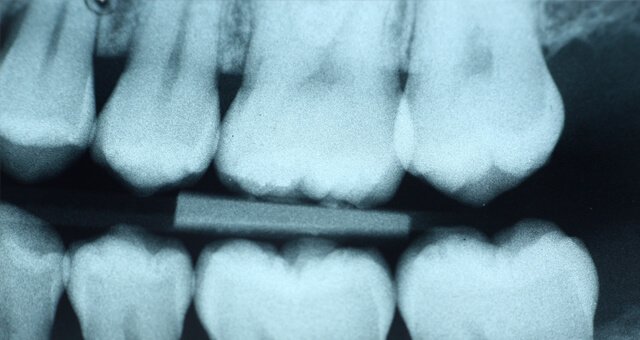
Why X-rays are needed
The types of X-rays your dentist will take will depend on the conditions for which you are being assessed. The decision to take an X-ray, and the type of X-ray taken, will be influenced by such things as your past and present oral health, an examination of your mouth, your age, risk of disease and any early symptoms of oral disease.
What can dental X-rays detect?
• Small areas of decay between teeth not visible in the mouth
• Problems with existing fillings, root canals, crowns or bridges
• The presence and severity of gum disease
• Abscesses or other sorts of infections
• Tooth development issues such as malformed teeth, extra or missing teeth etc.
• Cysts and some types of tumours
• Traumatic injuries such as tooth and bone fractures
• Proximity of teeth to nerves and sinuses
• The development of wisdom teeth and if there is a need for them to be removed
• The amount of bone needed for dental implants
If an X-ray shows decay, your dentist will discuss treatment options with you, which may be preventive to slow or stop further progression of the decay, or may involve a filling if there is an actual cavity.
Read the original article here.
More Dental Articles

The Complete Guide to Digital Smile Design at Diggers Rest Dental House
If you've ever wondered what goes into creating that signature bright smile you see on social media, you're not alone. The global cosmetic dentistry market is set to reach USD 115.09 billion by 2032, expanding at a compound annual growth rate of 13.21% from 2024. This...

Say Goodbye to Painful Cleanings: Our Gentle Approach to Sensitive Teeth
If you've been putting off your dental cleaning because you're dreading the discomfort, you're not alone. About half of all adults experience tooth sensitivity, and for many, the thought of a dental cleaning can be genuinely anxiety-provoking. At Diggers Rest Dental...

Why Older Australians Are Waiting Years For Vital Dental Care
Have you ever felt or suspected that you are on the scrapheap? Well, this all too common fear of the elderly is not too far from the truth in many instances. Why older Australians are waiting years for vital dental care? We live in a youth obsessed culture and have...

Dental Poverty vs Dental Privilege: An AFL Matter?
Is dental poverty soon to be the AFL’s next poster issue? When AFL player Josh Rachele good-humouredly declared on public radio that Port fans had missing teeth …