

What’s the Difference Between Straightening and Aligning

When it comes to orthodontic treatment, there’s no denying that straightening the appearance of your teeth is often one of the main drivers for patients. However, your orthodontist will often talk about aligning your teeth as well.
Confused? While these terms and concepts are similar, they both serve different but important functions for your smile when it comes to orthodontics.
What do we mean by teeth straightening?
This is the easier term for orthodontics because getting straight teeth is one of the top reasons people seek orthodontic treatment. To put it plainly, straightening teeth involves rotating and gently moving crooked teeth to bring them in line with their neighbours.
This primarily relates to the front six teeth, as these are the teeth that are seen when most people smile. While it is an important part of orthodontics, straightening teeth is pretty much all about the aesthetic look of your smile.
What does ‘aligning’ mean in orthodontics?
When your orthodontist talks about aligning your jaw, they’re referring to your bite. Your bite is how your upper and lower teeth come together, with the most noticeable issues of a misaligned jaw being overbites and underbites.
A misaligned jaw can cause uneven wearing of your teeth, breathing difficulties or even pain and discomfort, which is why aligning a ‘bad bite’ is a crucial part of orthodontic treatment. Even minor misalignments can cause difficulties later in life if the problem isn’t corrected.
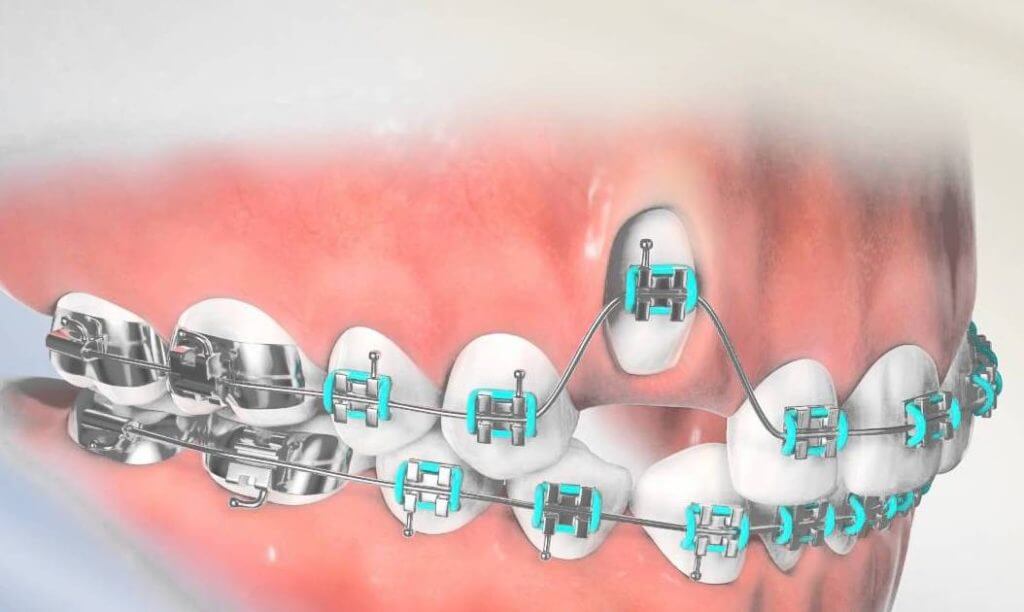
Can you straighten teeth without aligning the jaw?
You might have seen aesthetic-focused treatments that claim to correct your smile in a shorter period of time; however, these tend to be limited treatments. A limited treatment focuses only on the front six teeth to give the appearance of a straighter smile without addressing the underlying alignment issues that will continue to be a problem.
Generally, most orthodontists won’t recommend a limited treatment as the alignment issues could be exacerbated by the new positioning of your teeth, which could lead to more serious issues down the line. It also means that the long-term stability is likely to be severely compromised, with relapse a more common issue.
Why does orthodontic treatment often take two years?
While the duration of your orthodontic treatment will depend on several different factors, two years can be the average length of time you will be wearing braces or clear aligners. This is because the process of moving your teeth safely is gentle; this protects the integrity of your teeth and gums in the long term.
In addition, you may notice that your teeth look straighter earlier in your treatment period, but you may still be required to continue your treatment for several months. This is because getting the correct alignment of your jaw is often a slow and subtle process, but one that will help to protect your smile for years to come.
If you’re curious about orthodontic treatment and want to learn more, make an appointment with a specialist orthodontist and have your smile assessed. They will provide you with more information about your treatment options and information specific to your smile.
To read the original article, click here.
Note: All content and media on the Sunbury Dental House website and social media channels are created and published online for informational purposes only. It is not intended to be a substitute for professional medical advice and should not be relied on as health or personal advice.
Services we mentioned:


More Dental Articles
Can You Stop a Cavity Getting Worse?
You may not know what the bacterium Streptococcus mutans is, but you know what a cavity is. Also known as caries in both the singular and plural, they’re tiny holes in the teeth caused by surface bacteria creating acid from sugars. Somehow my brain interposes...

Caring For Older People And Their Oral Health
Since the 1970s, significant research has gone into quantifying the relationship between oral health and general wellbeing. Fifty years has extended this into biomedical and clinical perspectives that build broader understandings. The world population of people aged...

The Tooth Regeneration of Mice … And Men?
How is it that different tooth replacement strategies evolved? Which mechanisms prevent the replacement of human teeth? Homo sapiens, as we know, are limited to two sets of teeth; the second replaces our deciduous, or “baby teeth”. There are of course reptiles, fish,...

Can Toothache cause Migraine and Why?
Question: Can Toothache cause Migraine? Indeed it can. Almost all headaches and toothaches are detected by the trigeminal nerve, one of the largest nerves in the head. It’s this connection that causes the direct relationship between toothache and migraine,...