

What Is the Process of Root Canal Therapy?
Hi, Dr Thea here. One of the gentle dentists of Dental House Group.
Yesterday, I was with one of our new patients Margaret from Diggers Rest. She came in because she was experiencing really bad pain in her back molar. After our comprehensive examination, we identified that her tooth was badly infected, and the bacterial has gone to the nerve, which was why the pain was so excruciating. The treatment for her would be a root canal therapy. Margaret said to me… Thea, root canal therapy sounds really painful, what does that involve? After taking her through the process, she was so much calmer. After the treatment, she said… Wow, that was so much better than I expected!
This got me thinking… There is so much misconception about root canal treatment, so I thought I’ll make a video about it.
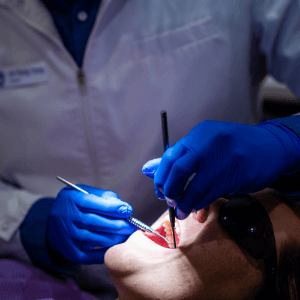
A root canal treatment can save a badly infected or damaged tooth. The tooth may have become infected or damaged by decay, repeated dental work, wear and tear, gum disease, cracked fillings or an injury to the tooth.
A root canal treatment involves drilling a hole into a decayed or damaged tooth and removing the soft centre, known as the dental pulp. The dental pulp is made up of connective tissue, nerves and blood supply, and extends into the roots of the tooth. When the dental pulp is damaged, bacteria can start to multiply inside the tooth. This can lead to an infection or abscess, which is a pocket of pus that forms at the end of the tooth’s root.
So what happens during a root canal treatment?

First, the dentist takes an x-ray of the tooth to see the shape of the root canals and determine whether there is an infection around the tooth. They will use a local anaesthetic to numb the area around the tooth before drilling a hole in the tooth to remove the pulp. This way, you won’t feel anything during the procedure.

It can take several appointments for the dentist to clean and shape the hole inside the tooth before placing a sterile filling inside. They may also insert small support into the root canals to strengthen the tooth. After the root canal treatment, it is highly recommended to cap the tooth with a dental crown if necessary.

Saving the tooth if possible is important. It works better than an artificial tooth for biting and chewing. Replacing a lost tooth with an artificial one often needs more complex dental procedures. Therefore, root canal treatment is often the best way of saving your tooth if possible.
I hope this gives you a better understanding of root canal therapy. Here at Dental House Group, we have helped many patients with this procedure to help them save their teeth, so you will be in experienced hands. If you have an infected tooth and want a professional opinion about your situation, simply give us a call on 1800GENTLE, direct message us on social media, or complete the form on our website, and we will help you organise your appointment. See you in the next video.
Services we mentioned:



Related Articles

How to Fix Crooked Teeth?
Do you or your child have crooked teeth, and want to have them straightened and aligned? In this episode, we’re going to look at a few ways to correct crooked teeth…

What’s the Best Option to Replace My Missing Teeth?
What is the best option to replace my missing teeth? Today we’re going to discuss some of the options available to replace missing teeth…

What Are the 3 Causes of Toothache and How to Prevent It?
What are the three main causes of toothache? And how to prevent it. Today we’re going to share with you the three most common causes of toothache and how you could prevent it…
What Is The Process Of Dental Implant?
This morning, we just placed 4 dental implants successfully into one of our patients’ Helen’s mouth. She was so happy with the results!