
Overbite Invisalign: Can Invisalign Fix an Overbite?
So, you have an overbite and want to know if Invisalign can help. Good question. The truth is that the answer isn’t straightforward. It depends on the type of overbite that you have.
This is the part that many articles will gloss over. Here is the moment where we actually explain everything about what an overbite is, when an overbite Invisalign works well, when it doesn’t, how long it usually takes, and what is going to happen if you visit our clinic.
What Counts as an Overbite?
An overbite is when your top front teeth sit noticeably ahead of your bottom teeth, creating overlap when your mouth’s closed. A bit of overlap is completely normal, by the way. The American Association of Orthodontists puts typical overlap at around 2 to 3 millimetres. Anything more than that starts edging into overbite territory.
You’ll sometimes hear it called “buck teeth,” though that phrase really doesn’t do justice to how much overbites can vary, from barely there to pretty pronounced.
Overbite Invisalign: Does It Actually Work?
Here’s the bit most guides conveniently skip: whether Invisalign works for you comes down to whether your overbite is dental or skeletal. A dental overbite is about tooth position, nothing to do with your jawbone, and moving teeth is literally what Invisalign is built for. A skeletal overbite is a jawbone issue, and no amount of aligner pressure reshapes bone.
For dental overbites, Invisalign treatment tends to work well, particularly mild to moderate cases. Skeletal overbites are more of a mixed bag: mild ones might respond to aligners plus elastics, but the more severe cases often end up needing braces or, in some situations, jaw surgery alongside orthodontic work. None of this is something you can figure out yourself, though. Your dentist needs an actual look, sometimes an X-ray, before anyone can say which category you’re in.
Which Overbites Respond Well to Overbite Invisalign Treatment
Invisalign can be most effective for addressing mild to moderate overbites, either by itself or in association with minor attachments and elastics. This means that when the overbite is entirely attributed to the relative position of the teeth, it’s often addressed well with aligners.
Whether or not serious cases of overbite can be managed using Invisalign is a more complex matter. Although technically feasible, Invisalign might not be sufficient by itself, and your dental professional may refer to other methods if needed. Don’t forget that a consultation is a great way to identify what needs to be done in your case.
How Overbite Invisalign Treatment Works, Step by Step
It starts with a full exam, usually including scans or an X-ray so your dentist can actually see what’s going on with your bite. From there, treatment gets mapped out using digital smile design, which plans out how your teeth (and sometimes your bite) will move over the course of things.
Once the plan’s locked in, you get your first aligners and instructions on wearing them, generally 20 to 22 hours a day. For a good chunk of overbite cases, small tooth-coloured attachments or elastic bands get added partway through. These give the aligners extra leverage to actually correct the bite, not just straighten teeth in place. You’ll come in periodically so your dentist can check things are tracking as planned and adjust if they’re not.
How Long Overbite Invisalign Treatment Takes
Timeframes swing quite a bit depending on severity. Mild dental overbites often wrap up in 6 to 12 months. Moderate cases commonly run 12 to 18 months. More complex or severe cases can stretch to 18 to 24 months or beyond.
Age plays into it too; younger patients whose jaws are still developing sometimes see things move faster. But honestly, the single biggest factor within any of these ranges is how consistently you actually wear your aligners. Skip the recommended hours and don’t be surprised when treatment runs longer than expected.
Overbite Invisalign vs Braces: Which Is Right for You?
For plenty of mild to moderate dental overbites, Invisalign and traditional braces can land in similar places, just by different routes. Invisalign is removable, generally less visible, and doesn’t come with food restrictions. Braces don’t rely on you remembering to wear anything, since they’re fixed in place, which can make them more predictable for complex skeletal cases.
Neither one is necessarily the best choice. It all depends on your particular case, your situation, and whether you are willing to comply with the demands of wearing them 24 hours a day. Speak with your dentist to discover which is appropriate for you.
Factors Influencing the Cost of Invisalign Treatment
The cost relates not only to the severity of the overbite, but also whether additional attachments or elastic bands are needed and the length of the plan. Complicated cases mean more aligners and a longer duration of treatment.
We try to keep pricing straightforward, and our price list gives a general sense of what to expect, with payment plans available if you’d rather spread it out. None of these figures is a quote, though. Your actual cost only gets confirmed once your dentist has properly assessed your bite.
Signs Your Overbite Might Need Treatment
Common signs include jaw soreness or clicking, trouble biting or chewing comfortably, some speech difficulties, and sometimes worn front teeth from repeated contact. An overbite can also be one of several things contributing to aw discomfort over time, which is worth discussing with your dentist.
Not every overbite needs fixing, to be clear. Plenty of mild cases sit just outside “normal” without causing any real trouble. It really comes down to whether it’s bothering your comfort, your teeth, or your confidence enough that you actually want to do something about it.
What Happens at Your Overbite Invisalign Consultation?
At your consultation, your dentist examines your bite, likely takes some scans or an X-ray, and talks through what you’re hoping to achieve. This is where they work out whether you’re dealing with a dental or skeletal overbite, how severe it is, and whether Invisalign is realistic or something else makes more sense.
Curious what treatment could actually look like on real teeth? Searching Invisalign before and after overbite is a pretty common first step, and it’s worth browsing our Invisalign before and after overbite gallery too. Worth keeping in mind, as the gallery itself says, those results belong to those specific patients and don’t represent what every case will achieve.
Looking After Your Teeth During Overbite Invisalign Treatment
Oral hygiene becomes extremely important while wearing Invisalign since food particles, which may become stuck between trays and teeth, may result in the development of plaque. Therefore, it is extremely important to brush and floss one’s teeth before reinserting trays; otherwise, it might lead to damage to teeth and gums. Some patients also choose to discuss cosmetic bonding with their dentist once Invisalign treatment is complete, if they’d like to address any other minor aesthetic concerns. It is also important to clean your trays, and rinsing them with water is not enough to ensure that they are completely free from bacteria.
Frequently Asked Questions
1. Can Invisalign fix a severe overbite?
In some cases, extreme overbites, especially those that are skeletal, must be treated with elastics, attachments, or, in some instances, braces or jaw surgery. A dentist is the only one who can make this decision after a full examination.
2. How can I understand if my overbite is dental or skeletal?
The truth is, it’s impossible to figure it out without consulting an expert. A dentist’s examination, possibly with the help of some X-ray imaging, is required to determine whether it is the position of the teeth or the structure of the jaw.
3. Does overbite treatment require the use of elastics?
It is not always necessary. Since mild overbites in some cases only need aligners, moderate to severe overbites usually require the use of small attachments or elastic bands to help.
4. How much does Invisalign treatment for overbites cost?
The price depends on the severity of the overbite and how long treatment takes. Check our cost sheet for a general guide, though your final cost is only confirmed after an assessment.
5. Can adults get their overbite corrected, not just kids?
Yes, plenty of adults go through overbite correction. It can take a touch longer since jaw growth has finished by then, but it’s a common, realistic path.
6. What happens if Invisalign doesn’t fully fix my overbite?
If aligners alone aren’t cutting it, your dentist might add attachments or elastics, or bring up other options like braces. That’s exactly why progress checks happen throughout, so adjustments happen early rather than too late.
Note: All content and media on the Sunbury Dental House website and social media channels are created and published online for informational purposes only. It is not intended to be a substitute for professional medical advice and should not be relied on as health or personal advice.
Services Mentioned


Related Articles

Special Needs Dentists: Dr Trudy Lin: Young Australian of the Year 2022 SA Candidate
In a country of more than 18,000 dentists, only fifteen are registered professionals in the area of Special Needs. Dr Trudy Lin is the…
Endodontics: Can Tooth Pulp Be Made Healthier?
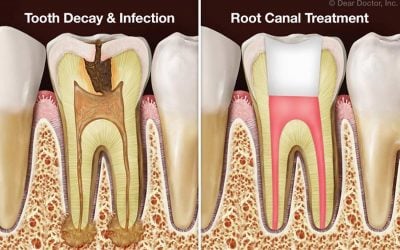
We live at a time when we are discovering new vistas of knowledge and understanding, especially on the biological front. Endodontics: the branch of dentistry concerned with diseases and injuries of the soft tissues inside a tooth (the dental pulp) is a perfect example...

Can Toothache cause Migraine and Why?
Question: Can Toothache cause Migraine? Indeed it can. Almost all headaches and toothaches are detected by the trigeminal nerve, one of the largest nerves in the head. It’s this connection that causes the direct relationship between toothache and migraine,...
The Tooth Regeneration of Mice … And Men?
How is it that different tooth replacement strategies evolved? Which mechanisms prevent the replacement of human teeth? Homo sapiens, as we know, are limited to two sets of teeth; the second replaces our deciduous, or “baby teeth”. There are of course reptiles, fish,...