

Metallic Taste in Your Mouth? This Could Be Why

A metallic taste is usually nothing serious. Upper respiratory infections, such as a cold or a sinus infection, can change your sense of taste. In this case, the problem will clear up when your sickness does.
Do you notice it whenever you eat something specific (such as shellfish or nuts)? If so, it could be a sign of a food allergy, and you should bring it up with your primary care doctor or an allergist.
Another possibility: pregnancy. Many women notice changes to their sense of taste when they’re expecting. Multivitamins containing heavy metals (copper or zinc, perhaps) and certain cold remedies (like zinc lozenges) may also cause a metallic taste. Some Rxs can create an odd taste in the mouth, too, including certain antibiotics, as well as some blood pressure, glaucoma, and osteoporosis meds.
There’s not a whole lot you can do to prevent a metallic taste from coming on, but it’s typically temporary. If you’ve experienced this for a long time or you find it annoying, talk to your doctor. In rare cases, a metallic taste may be associated with neurological conditions (such as dementia), liver or kidney problems, or undiagnosed diabetes. (However, these conditions are among the less common possibilities and are typically accompanied by other symptoms.)
Read original article here.
More Dental Articles
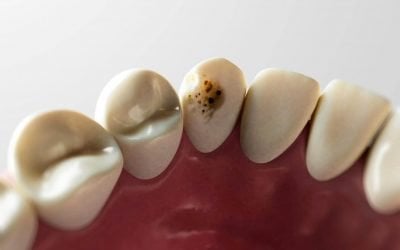
Can You Stop a Cavity Getting Worse?
You may not know what the bacterium Streptococcus mutans is, but you know what a cavity is. Also known as caries in both the singular and plural, they’re tiny holes in the teeth caused by surface bacteria creating acid from sugars. Somehow my brain interposes...

Caring For Older People And Their Oral Health
Since the 1970s, significant research has gone into quantifying the relationship between oral health and general wellbeing. Fifty years has extended this into biomedical and clinical perspectives that build broader understandings. The world population of people aged...

The Tooth Regeneration of Mice … And Men?
How is it that different tooth replacement strategies evolved? Which mechanisms prevent the replacement of human teeth? Homo sapiens, as we know, are limited to two sets of teeth; the second replaces our deciduous, or “baby teeth”. There are of course reptiles, fish,...

Can Toothache cause Migraine and Why?
Question: Can Toothache cause Migraine? Indeed it can. Almost all headaches and toothaches are detected by the trigeminal nerve, one of the largest nerves in the head. It’s this connection that causes the direct relationship between toothache and migraine,...