

How Many Wisdom Teeth Do People Have
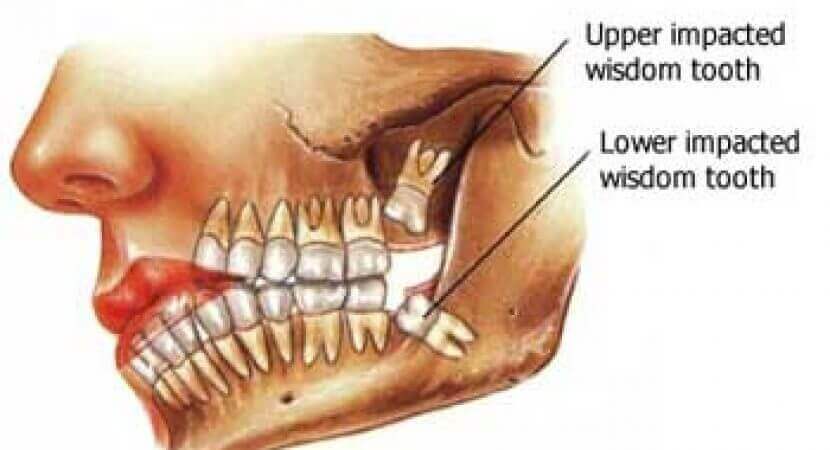
A wisdom tooth is a tooth right at the back of the mouth. The most common age to get wisdom teeth is between age 17 and age 19. It is, however, not unusual to have wisdom teeth erupt anytime from age 17-25.
The average adult has four wisdom teeth in each corner of the mouth. Some people, however, can have fewer, and some people are born with none!
20-25% of people worldwide are estimated to have FEWER than four wisdom teeth. So there is a one in four chance you will have less than the usual four wisdom teeth.
There is not always enough space for wisdom teeth. Often people experience pain, discomfort or infection from wisdom teeth.
What is the maximum number of wisdom teeth?
The normal person will have four (or fewer) wisdom teeth. Some people, however, do have extra wisdom teeth. These people have an additional tooth or set of teeth. These extra wisdom teeth are referred to as “supernumerary” teeth.
In my work, seeing thousands of patients, I personally have seen quite a few patients that have DOUBLE wisdom teeth. That’s a total of eight wisdom teeth! There are some extreme cases where people have even more. These cases are rare, though, and you would be unique to fall into this category. In fact, around one or two people per hundred have these extra wisdom teeth.
The most number of wisdom teeth I have seen was twelve in one person. This was pretty extraordinary, and I am not sure I will ever reencounter this in my practice as a dentist.
Who is most likely to get wisdom teeth?
Certain populations are more or less likely to get four wisdom teeth. Females are slightly more likely to be MISSING one or more wisdom teeth (around 15%!)
Different locations and backgrounds around the world are more or less likely to get wisdom teeth. For example, people of African and European descent are more likely to have all four wisdom teeth – while, as a general rule, people of Asian descent are more likely to be missing one or more wisdom teeth.
Do we get wisdom teeth at twelve?
I often get asked by patients or parents if wisdom teeth come in at 12 years old. A new set of teeth indeed grows down the back at age 10-13. We call these teeth the “second molar” or sometimes “the 12-year-old molars”.
No baby teeth are lost when these new molars erupt at the back of the mouth around age twelve. However, these are NOT wisdom teeth! These are normal molars.
Usually, a child will get one 12-year-old molar in each corner of the mouth (four in total). The new lower teeth generally erupt before the upper teeth.
Do I need my four wisdom teeth out?
Remember, not all wisdom teeth need to be extracted– nature does not often give us pointless body features! There are, however, many factors of modern life that are leading to impaction, infection, and pain. This means many people require wisdom tooth removal. Your best bet if you are wondering is to make a dental appointment and ask your dentist.
How many wisdom teeth can be taken out at once?
It is widespread for wisdom teeth to require extraction. When this happens, it is common to extract all four in one go – especially if the patient is put to sleep for a tooth removal. It makes sense to get everything sorted in one go. It helps limit surgical risk and means only one bout of healing is required.
Another common approach for people who need their wisdom teeth out is to take out two at a time. If you aware awake and in the chair when you have the wisdom teeth removed, this is a popular option. Lots of people get the upper and lower tooth at the same time side removed simultaneously.
If a single tooth is causing trouble or pain – some people elect to have that one problematic tooth extracted and then plan the remainder at a later date – if they do indeed need to be taken out.
To read the original article, click here.
Author: Dr. Kit
Note: All content and media on the Sunbury Dental House website and social media channels are created and published online for informational purposes only. It is not intended to be a substitute for professional medical advice and should not be relied on as health or personal advice.
Services we mentioned:

Related Articles
Can You Stop a Cavity Getting Worse?
You may not know what the bacterium Streptococcus mutans is, but you know what a cavity is. Also known as caries in both the singular and plural, they’re tiny holes in the teeth caused by surface bacteria creating acid from sugars. Somehow my brain interposes...

Caring For Older People And Their Oral Health
Since the 1970s, significant research has gone into quantifying the relationship between oral health and general wellbeing. Fifty years has extended this into biomedical and clinical perspectives that build broader understandings. The world population of people aged...

The Tooth Regeneration of Mice … And Men?
How is it that different tooth replacement strategies evolved? Which mechanisms prevent the replacement of human teeth? Homo sapiens, as we know, are limited to two sets of teeth; the second replaces our deciduous, or “baby teeth”. There are of course reptiles, fish,...

Can Toothache cause Migraine and Why?
Question: Can Toothache cause Migraine? Indeed it can. Almost all headaches and toothaches are detected by the trigeminal nerve, one of the largest nerves in the head. It’s this connection that causes the direct relationship between toothache and migraine,...