

Effects of Chewing Gum on Your Teeth

IS CHEWING GUM GOOD FOR YOUR TEETH?
The answer is yes if it is the right kind. Chewing gum can help prevent tooth decay, as long as you choose sugarless gum. Chewing gum causes your mouth to produce more saliva, which helps neutralize and rinse away some of the acids that form in your mouth when you break down food. So, if you chew gum after a meal, you may be helping to protect your teeth and promote oral health. Also, the minerals generated by the extra saliva can even help strengthen your tooth enamel, which also reduces your risk of a dental cavity.
IS SUGAR-FREE GUM BAD FOR YOUR TEETH?
Parents can share this oral care hint with children and teens, who often chew gum. Just be sure that they choose sugarless gum, not a sugary bubble gum, which can have the opposite effect and contribute to the buildup of plaque on teeth. So, if you are uncertain about which gum is best for promoting oral health, look for a sugarless gum for yourself or your family members. But remember (and remind children) that gum-chewing, even sugarless gum, is not a substitute for a regular oral care routine of twice-daily tooth brushing and daily proper flossing with quality dental care products.
More Dental Articles
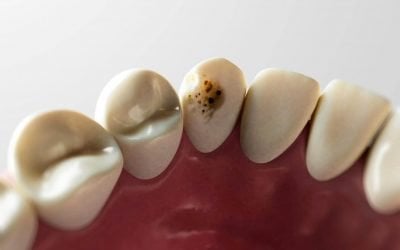
Can You Stop a Cavity Getting Worse?
You may not know what the bacterium Streptococcus mutans is, but you know what a cavity is. Also known as caries in both the singular and plural, they’re tiny holes in the teeth caused by surface bacteria creating acid from sugars. Somehow my brain interposes...

Caring For Older People And Their Oral Health
Since the 1970s, significant research has gone into quantifying the relationship between oral health and general wellbeing. Fifty years has extended this into biomedical and clinical perspectives that build broader understandings. The world population of people aged...

The Tooth Regeneration of Mice … And Men?
How is it that different tooth replacement strategies evolved? Which mechanisms prevent the replacement of human teeth? Homo sapiens, as we know, are limited to two sets of teeth; the second replaces our deciduous, or “baby teeth”. There are of course reptiles, fish,...

Can Toothache cause Migraine and Why?
Question: Can Toothache cause Migraine? Indeed it can. Almost all headaches and toothaches are detected by the trigeminal nerve, one of the largest nerves in the head. It’s this connection that causes the direct relationship between toothache and migraine,...