

Dentures Vs. Dental Implants
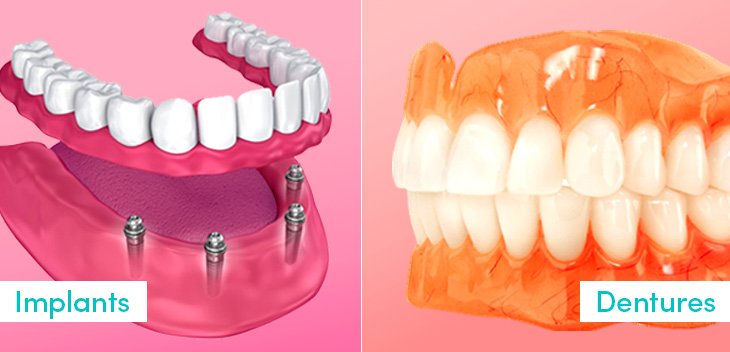
Dental Implants in Detail
Dental implants are titanium rods or screws that are fused to your jawbone. In essence, they act as artificial roots, and serve as a base for a permanent tooth replacement, called a crown, that mimics the look and feel of natural teeth. After the titanium rod is secure, your dentist will attach the crown to it—the result: a replacement that looks like your natural tooth.
Dentures vs. Dental Implants: Bite by Bite
When considering replacements for missing teeth, the real question is, how do each of these options stack up? Here’s the breakdown:
Longevity
Dental implants win hands down. If you take good care of your implants, they can last as long as natural teeth. Dentures, on the other hand, typically need to be replaced every five to eight years.
Functionality
Although dental implants aren’t a like-for-like replacement for a natural tooth — they are made from titanium and are comparable in strength and performance to natural teeth. The same can’t be said for dentures, which can slip and slide around in your mouth, sometimes making it difficult to speak or eat. While modern dentures have come a long way, they’re still no match for the permanence of dental implants.
Aesthetics
When it comes to looks, in general, dental implants are more natural-looking than dentures. However, if you get your dentures custom made by a professional, most people won’t be able to tell the difference. It just depends on how much you’re willing to pay.
Comfort
Since dental implants are literally fused to your jawbone, they will feel natural and well-fitting in your mouth and typically don’t cause discomfort, especially once you’ve had them for a couple of weeks. Dentures can be a bit more uncomfortable. The bulkiness, excessive saliva, soreness, and irritation are common complaints. Although you will get used to your dentures after a couple of months, the fact that dental implants are a permanent part of your mouth typically makes them a more comfortable option.
Cost
The price of dental implants varies, depending on how many additional procedures you need to undergo. It’s also important to note that your insurance can pay up to 50% of the cost of your dentures, whereas dental implants are much less likely to be covered under your dental insurance plan. However, given that dentures tend not to last as long, you should factor in the expense associated with replacing them. That could make dentures more expensive than dental implants in the long run.
What’s the verdict on dentures vs. dental implants?
Although dentures are a serviceable missing-tooth replacement option, dental implants’ permanence and natural look make them a great choice. Of course, you must consult with a dentist before you decide on dentures vs. implants.
Note: All content and media on the Sunbury Dental House website and social media channels are created and published online for informational purposes only. It is not intended to be a substitute for professional medical advice and should not be relied on as health or personal advice.
Services we mentioned:

More Dental Articles

The Complete Guide to Digital Smile Design at Diggers Rest Dental House
If you've ever wondered what goes into creating that signature bright smile you see on social media, you're not alone. The global cosmetic dentistry market is set to reach USD 115.09 billion by 2032, expanding at a compound annual growth rate of 13.21% from 2024. This...

Say Goodbye to Painful Cleanings: Our Gentle Approach to Sensitive Teeth
If you've been putting off your dental cleaning because you're dreading the discomfort, you're not alone. About half of all adults experience tooth sensitivity, and for many, the thought of a dental cleaning can be genuinely anxiety-provoking. At Diggers Rest Dental...

Why Older Australians Are Waiting Years For Vital Dental Care
Have you ever felt or suspected that you are on the scrapheap? Well, this all too common fear of the elderly is not too far from the truth in many instances. Why older Australians are waiting years for vital dental care? We live in a youth obsessed culture and have...

Dental Poverty vs Dental Privilege: An AFL Matter?
Is dental poverty soon to be the AFL’s next poster issue? When AFL player Josh Rachele good-humouredly declared on public radio that Port fans had missing teeth …