

5 Ways to Tell If Your Child May Need Orthodontic Treatment
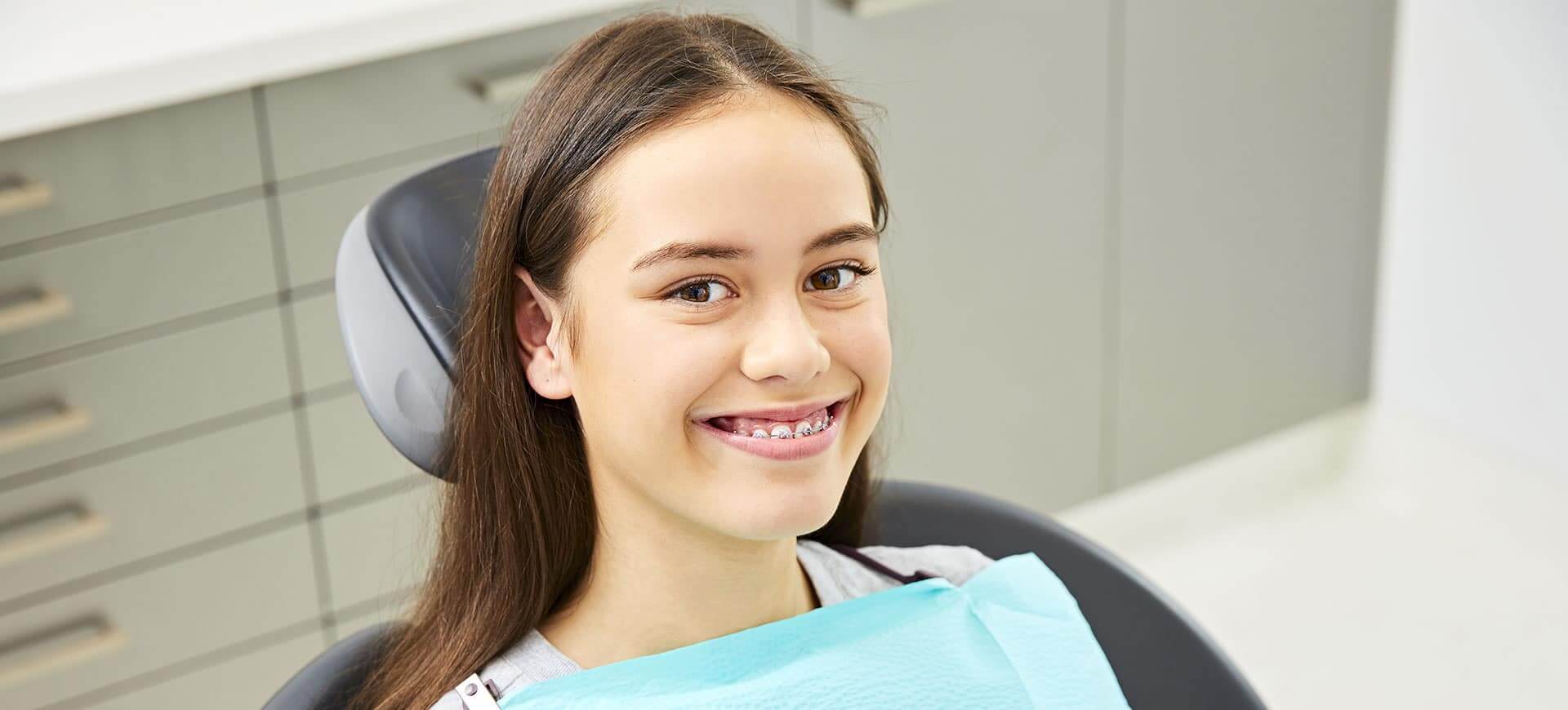
While some signs your child might need orthodontic treatment are easy to spot, others can be more subtle or ones you didn’t know could potentially be resolved with orthodontic treatment.
You can get orthodontic treatment as an adult, but in many cases, it is easier to undergo treatment at a younger age when your child is still growing, and the complex movements are easier to perform. It may also mean that your orthodontist is able to intercept some misalignments before they have completed growing, making for an easier overall treatment.
We generally recommend that you and your child visit an orthodontist for the first time around age 8, this will allow the orthodontist to assess the growth of their teeth and jaws and let you know of any potential issues early on, as preventative orthodontic treatment can be beneficial for some children.
If you’re wondering whether your child may need orthodontic treatment, here are some signs to look out for:
How to tell if your child might need orthodontic treatment
Their teeth are crooked
Yes, this is an easy one to spot, but if you can see that your child’s teeth are growing at peculiar angles or are overlapping, then it is likely that they will need orthodontic treatment once all their adult teeth have come through.
They have an overbite or an underbite
An overbite or underbite can be another sign that your child will need orthodontic treatment later in life, and this can often be discovered early on as the misaligned jaw will be evident from a young age. While their teeth might grow in fairly straight, it is a good idea to ensure their bite is properly aligned so they don’t develop any pain or additional issues as they grow up.
They have a speech impediment
A lisp or difficulty speaking can occasionally be caused by a misaligned jaw or crooked teeth. Your orthodontist will be able to assess whether it is an issue that can be corrected with orthodontic treatment or if it will require speech therapy.
They snore or have sleep apnoea
While the position we rest in can cause snoring, if your child snores all the time or suffers from sleep apnoea it may be caused by a small or misaligned jaw. Orthodontic treatment is often used to successfully treat many cases of sleep apnoea.
They’ve lost teeth prematurely
If your child loses one or more teeth at a young age, particularly if it is the result of an accident or poor hygiene, then you may find that they may require orthodontic treatment early. Otherwise, the teeth shift as the child grows to fill the gaps causing misalignment. A space maintainer may be required to help hold the gap to avoid more extensive orthodontic treatment down the track.
If you think that your child may require orthodontic treatment and want to be prepared, it is best to make an appointment with an orthodontist. You don’t require a referral from a dentist to make your first appointment.
Click here to read the original article.
Services we mentioned:


More Wellness Infographics
Can You Stop a Cavity Getting Worse?
You may not know what the bacterium Streptococcus mutans is, but you know what a cavity is. Also known as caries in both the singular and plural, they’re tiny holes in the teeth caused by surface bacteria creating acid from sugars. Somehow my brain interposes...
Caring For Older People And Their Oral Health
Since the 1970s, significant research has gone into quantifying the relationship between oral health and general wellbeing. Fifty years has extended this into biomedical and clinical perspectives that build broader understandings. The world population of people aged...
The Tooth Regeneration of Mice … And Men?
How is it that different tooth replacement strategies evolved? Which mechanisms prevent the replacement of human teeth? Homo sapiens, as we know, are limited to two sets of teeth; the second replaces our deciduous, or “baby teeth”. There are of course reptiles, fish,...

Can Toothache cause Migraine and Why?
Question: Can Toothache cause Migraine? Indeed it can. Almost all headaches and toothaches are detected by the trigeminal nerve, one of the largest nerves in the head. It’s this connection that causes the direct relationship between toothache and migraine,...